Unwrap Your Gifts
December is a season of gifts – and not just the wrapped kind! It’s the perfect time to help students recognize gifts that many of them rarely stop to notice: their own strengths. This month’s Activity of the Month, Identifying Transferable Skills, invites students to “unwrap” their own talents by noticing their strengths, naming them, and then putting them to work.
Even better, this activity was created with JAG Indiana Specialist Shonda Yates, who brings years of experience helping students identify and confidently communicate the talents they already possess. Her influence shaped an activity that feels meaningful, achievable, and empowering for students at any grade level.
What the Activity Looks Like
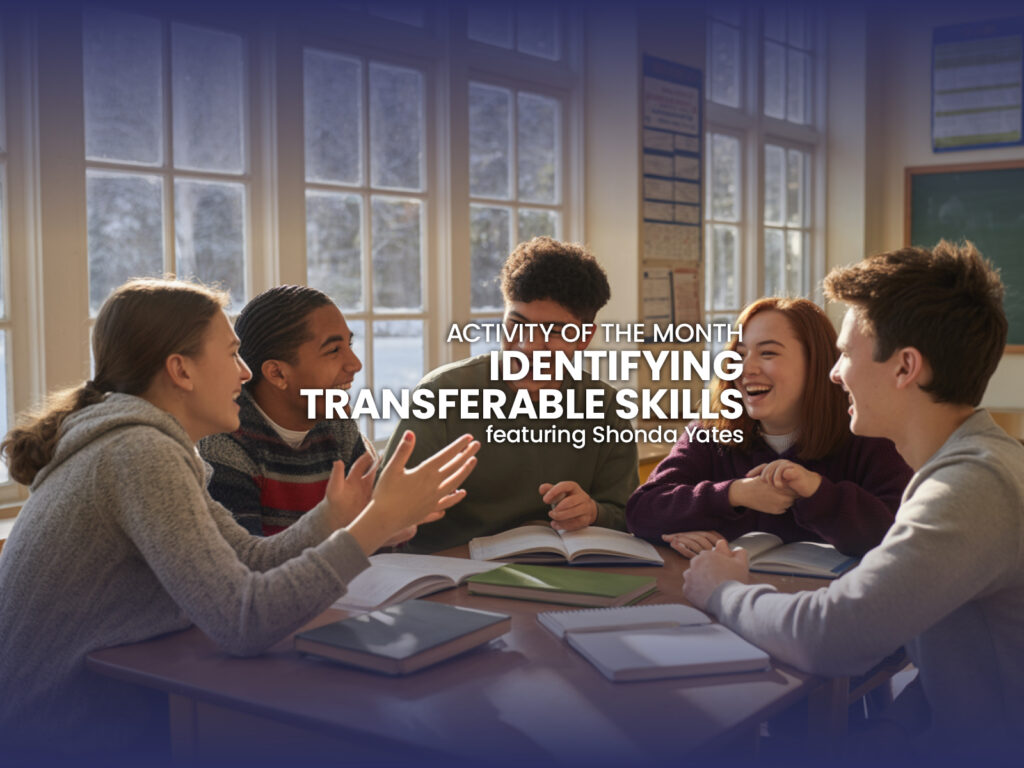
The Identifying Transferable Skills activity begins with simple success-story reflection. Students think back to moments when they worked hard and felt proud, describing what they accomplished and what made it possible.
From there, they identify transferable skills like communication, planning, leadership, empathy, and/or creative thinking that show up in their reflection. This step is often eye-opening for students, especially those who don’t always recognize their contributions until this reflection brings their strengths into focus.
Next, students work in small groups to design something that benefits their classmates. They choose roles, outline their idea, and plan the steps to make it happen. Projects might include a review game, team-building exercise, recess or board game, classroom culture activity, or anything that creates value for the group.
The goal isn’t the final product – it’s how each student uses their strengths to contribute. Groups pitch their ideas, sharing what they made, who it’s for, why it matters, and which Empowered Foundational Principle surfaced most clearly, including Sound Judgment, Passion, Freedom, and Win-Win Focus.
Why “Identifying Transferable Skills” Matters
Students often believe skills belong to a single subject: “I’m good at math, “ “I’m not good at writing,” or “I only use teamwork in sports.” But skills follow us everywhere. They move with us from school to work to life – they’re transferable. Helping students see this builds understanding that extends well beyond the classroom.
- It supports self-awareness. Students begin to see themselves not as someone who “sometimes gets things right,” but as someone with strengths they can count on.
- It reinforces belonging and connection. As students share their stories, they find common ground and naturally affirm one another’s skills, strengthening classroom culture in powerful ways.
- It prepares students for the real world. These reflections become invaluable when building resumes, preparing for interviews, applying for leadership roles, or exploring careers.
December can be a tough month when energy dips and motivation wavers – for students and teachers. This activity helps students end the semester feeling capable, confident, and proud.
Educator Spotlight: Shonda Yates (JAG Indiana)
This month, we’re celebrating Shonda Yates, who co-created and inspired this activity. Shonda is known for her unwavering belief in student potential. She sees gifts in students long before they see those gifts in themselves.
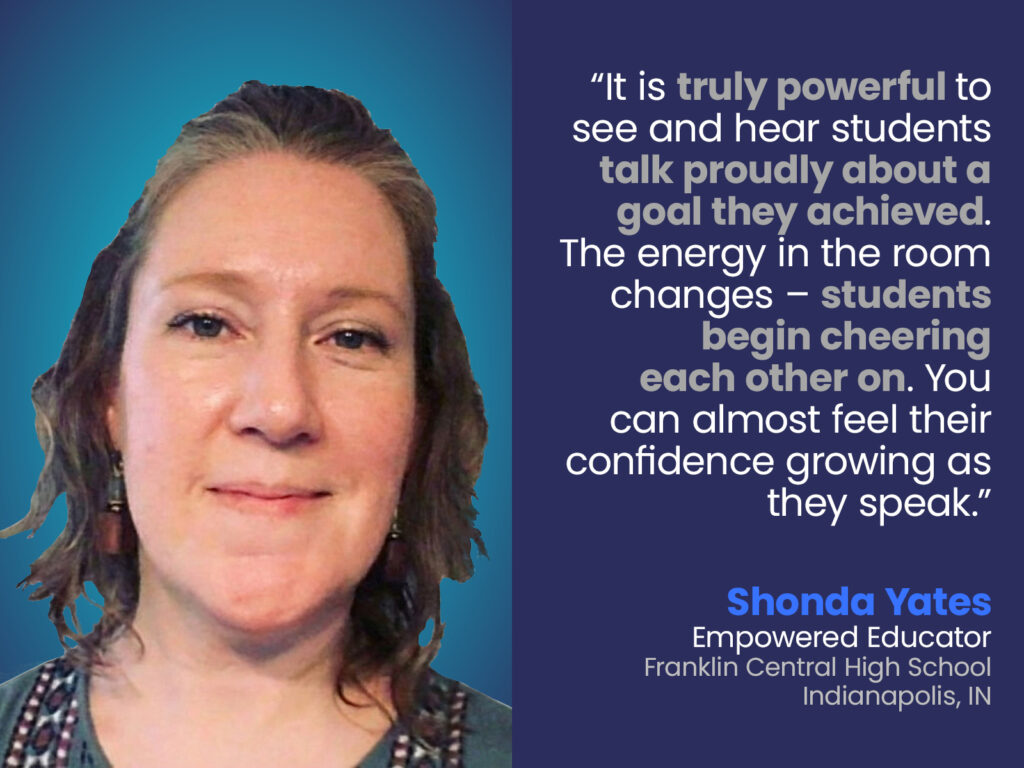
Shonda begins each school year with “strengths and skills discovery” because she believes every student deserves to see evidence of their own value early and often. “This activity is the first step in building students’ confidence to clearly communicate their strengths – whether in an interview, a team meeting, or any professional setting,” says Shonda. “It is truly powerful to see and hear students talk proudly about a goal they achieved. The energy in the room changes – students begin cheering each other on. You can almost feel their confidence growing as they speak.” More tips from Shonda:
- Listen deeply when students share their stories. “Many students don’t naturally recognize their own strengths – they often need someone to point them out. Simply being seen can be transformative.”
- Encourage students to keep a running skills inventory. “Write down what you’ve accomplished. It helps you communicate your impact and it gives you a confidence boost when facing something new.”
- Use classroom shout-outs with questions like “Who would you like to give a shout-out to, and why?” to model recognition and encouragement. When teachers model noticing strengths, students start noticing and naming each other’s gifts too.
- Extend this activity with the Agilities framework and Agile Work Profiler to deepen students’ self-awareness. Also, use ongoing journaling, reflection prompts, and success-story documentation to help students build a strong personal narrative.
Her approach is simple yet transformative: Create space for students to speak proudly about what they’re capable of and watch their confidence grow.
Help Students Give the Gift of Their Strengths
In a season synonymous with generosity, there’s no better time to help students realize that their strengths are gifts they can share. When students understand what they’re good at – and why it matters – they walk into the new year with more confidence, clarity, and ownership of their learning.
And that’s a gift that lasts far longer than a season.

TRY IDENTIFYING TRANSFERABLE SKILLS
Make this activity your own. Find free support on Empowered Hub.
Once you’ve tried the activity please share your thoughts and feedback with the 22,000+ other teachers who use Empowered Hub for ideas, inspiration, activities, resources, and support.
Useful Links
If you found this article helpful, we encourage you to go deeper on this topic by:
- Join the Empowered Community for access to 100s of free teacher tools and classroom resources.
- Try our Activity Creator AI tool to instantly turn your ideas into personalized learning experiences.
- Sign up for Empowered Educator Emails for new and timely resources that we’re sure you’ll love.